Expanding robotic float numbers a win for Australia’s ocean and climate insights
19 December 2025
An international fleet of around 4,000 robotic Argo floats has been measuring the temperature and salinity of the top two kilometres of the world’s oceans since 2000, capturing more than 100,000 high-resolution profiles every year.
Now this core ‘ocean observatory’ is set to be expanded with a new generation of Argo floats fitted with biogeochemical (BGC) sensors, thanks to Australian Research Council (ARC) funding of $1,490,619 awarded to a project led by the University of Tasmania’s Institute for Marine and Antarctic Studies (IMAS).
“This will enhance our insights into biogeochemical cycles, marine ecosystems and our climate, so it’s a big win for Australia,” said IMAS Oceanographer and Project Leader Professor Peter Strutton.
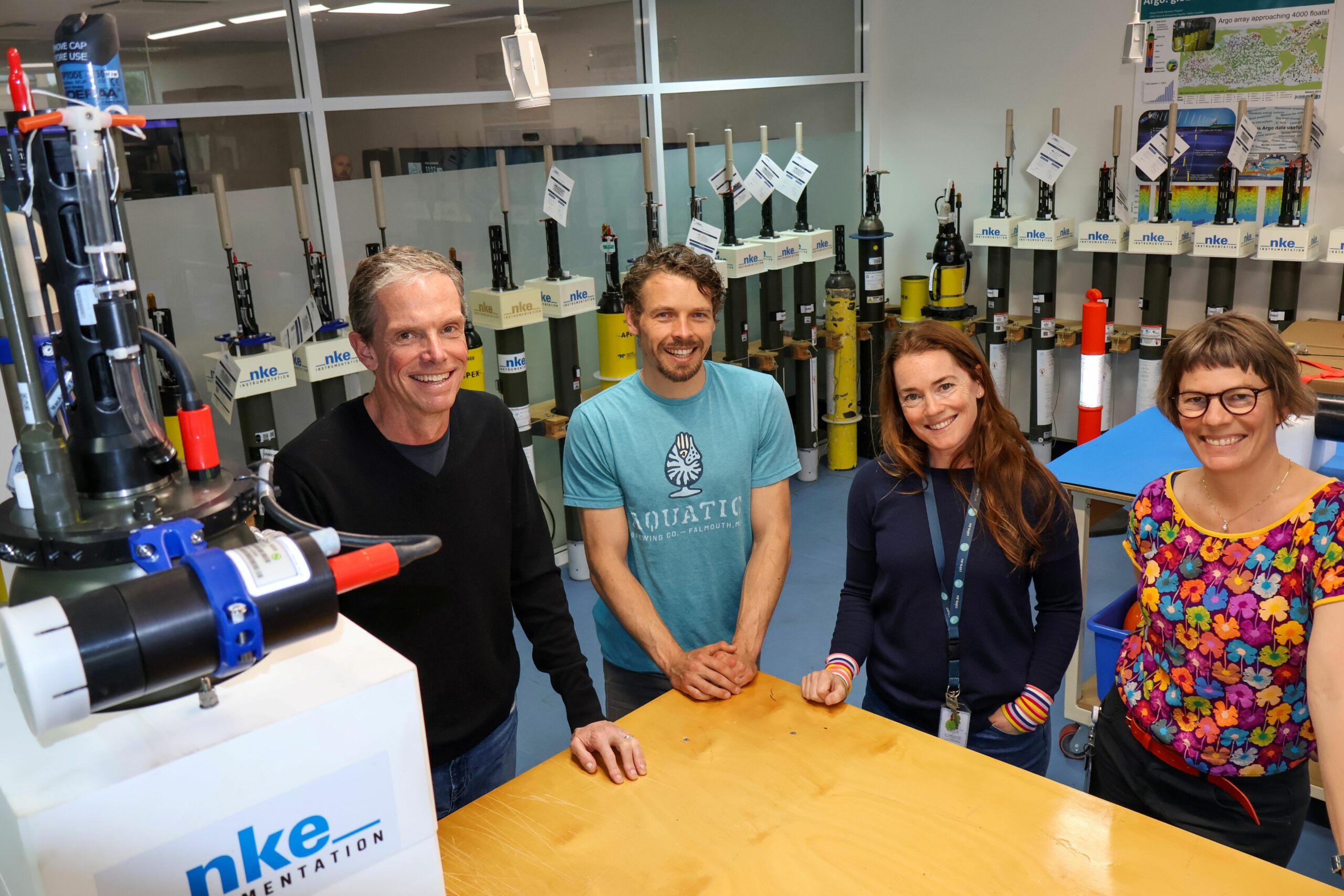
(photo: Mark Horstman)
“The project funding will see the acquisition and deployment of 12 additional floats with state-of-the-art sensors, which will autonomously measure ocean physics, biology and chemistry for less than 5% of the cost of traditional ship-based measurements – and significantly strengthen the Argo array in waters strategically important to Australia,” he said.
“Australia’s contribution to the global autonomous network will help drive a step-change in our understanding of marine ecosystems, deoxygenation, acidification, carbon cycling, fisheries, and how the ocean responds to climate change.”
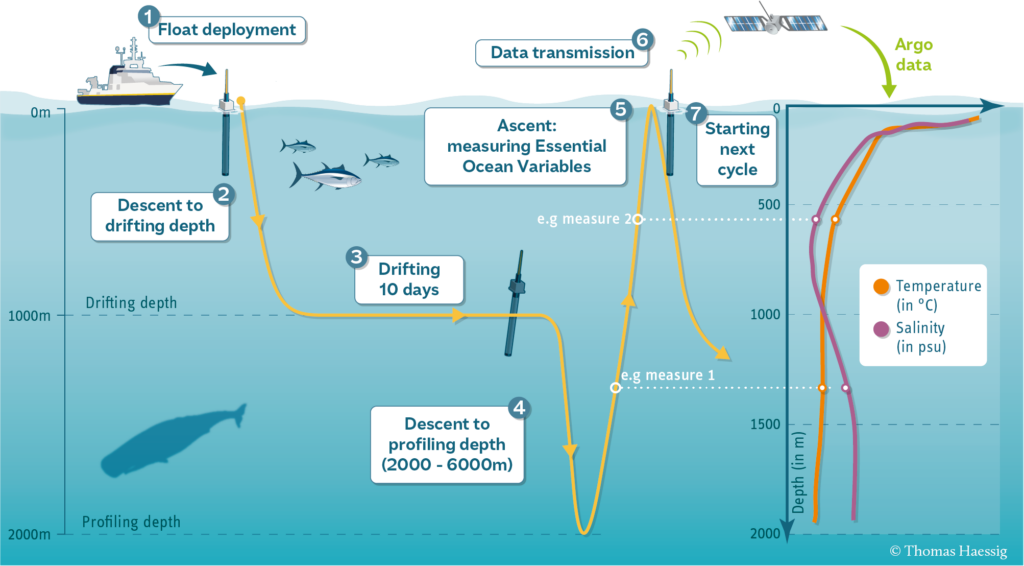
Argo floats drift with the ocean currents at a ‘parking depth’ of 1,000 metres for nine days, then sink to 2,000 metres and rise to the surface taking temperature, salinity and other measurements along the way. At the surface, the floats transmit the data via satellite to land-based Argo data centres, then the cycle begins again.
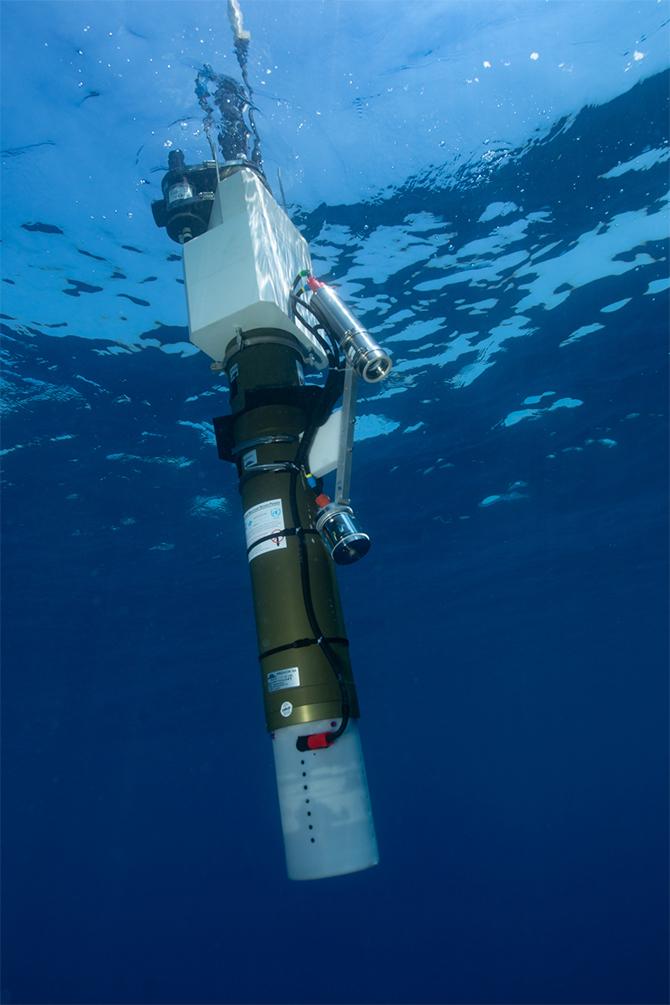
In addition to temperature and salinity, BGC-Argo floats measure dissolved oxygen, chlorophyll a (for phytoplankton biomass), particulate backscatter (for biologically-produced carbon), dissolved nitrate (a nutrient essential for phytoplankton growth), pH (acidity or alkalinity) and incoming light.
The new generation of BGC-Argo floats carry hyperspectral irradiance sensors that complement NASA’s new Plankton, Aerosol, Cloud, ocean Ecosystem (PACE) satellite, recently discussed at an international meeting at IMAS, enabling the study of phytoplankton communities in the ocean as well as from space.
The 12 additional BGC-Argo floats will measure 3,600 ocean biogeochemical profiles over seven years.
“They will help us answer questions about how the Southern Ocean absorbs human-made heat and carbon, and what the consequences are for the ocean from these ecosystem services,” said Dr Christina Schallenberg, who is a researcher with CSIRO, Australia’s national science agency, and co-leader of the IMOS BGC-Argo team.
“These floats will contribute to more scientific publications targeting this region, and they provide momentum for developing a well-trained workforce to manage the array and analyse the data it gathers.”
Professor Strutton said the project will ultimately enhance Australia’s already strong contribution to the core ocean observatory system.
“This global Argo array has transformed our ability to observe and predict the effects of climate change on ocean metabolism, carbon uptake and marine ecosystems.”
The project team includes researchers from IMAS and the Australian Antarctic Program Partnership (AAPP) based at the University of Tasmania, CSIRO, the University of NSW and the Australian Government’s Australian Antarctic Division (AAD).The BGC-Argo sub-facility, which will be operating these floats, is funded by the Integrated Marine Observing System (IMOS) and hosted at CSIRO.