“Needle in a haystack”: history of volcanic eruptions in East Antarctic ice core
19 June 2026
An innovative study confirms that ‘cryptotephra’ – microscopic glass shards and ash from volcanic eruptions – can be transported by the wind over thousands of kilometres and preserved in coastal East Antarctic snow and ice.
Scientists from Australia, Canada, and Denmark led by the University of Tasmania (UTAS) have published ‘Cryptotephra in the East Antarctic Mount Brown South ice core’ in the journal Climate of the Past.
Lead author Dr Meg Harlan with the Australian Antarctic Program Partnership at UTAS said their work demonstrates how the coastal East Antarctic site is an untapped archive for reconstructing Southern Hemisphere volcanism and atmospheric circulation.
“The Mount Brown South ice core opens a new window on Southern Hemisphere eruptions, atmospheric circulation, and volcanic influences on climate over recent decades and potentially much further back in time,” she said.
From climate to volcano archive
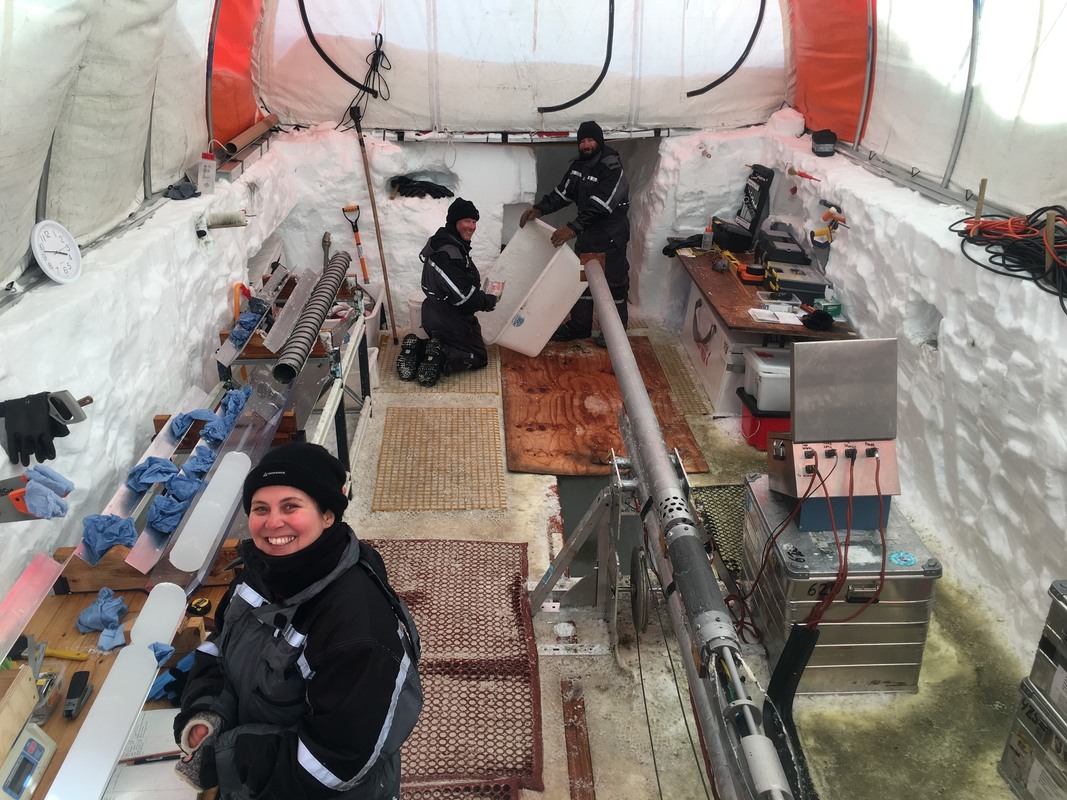
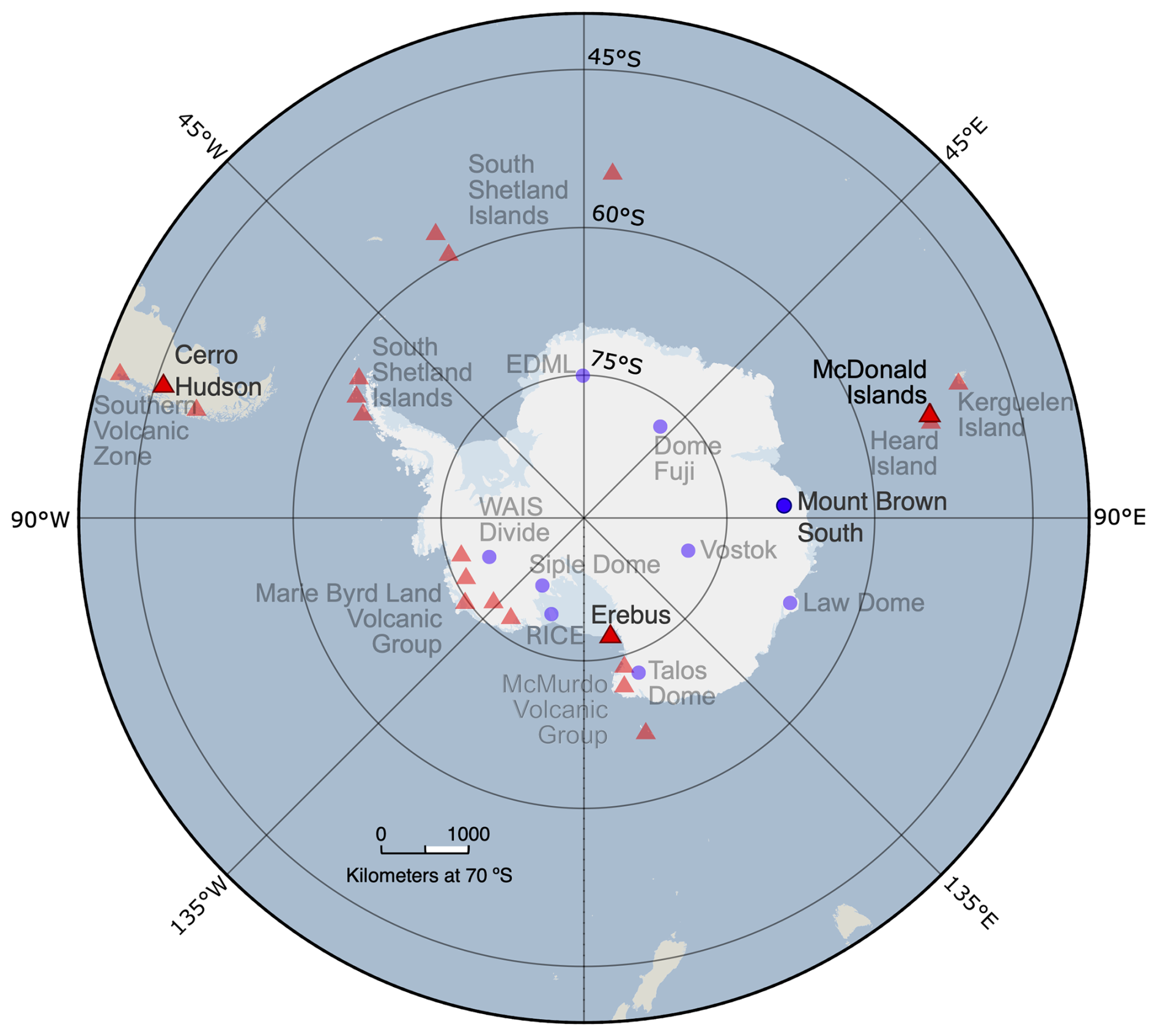
The Mount Brown South ice core is about 300 metres long and was drilled in coastal East Antarctica in 2017-2018. Previous analysis provides a high-resolution climate archive spanning more than a thousand years, with strong climatological links to the Southern Indian Ocean.
The pilot study focuses on the satellite-era record from the Mount Brown South core from 1979-2017, as the first ‘proof of concept’ investigation of its ability to receive and store wind-blown volcanic ash.
In ‘tephrochronology’, volcanic ash layers are valuable time markers because they can be tied to specific eruptions with known ages, and therefore used to improve dating of climate records.
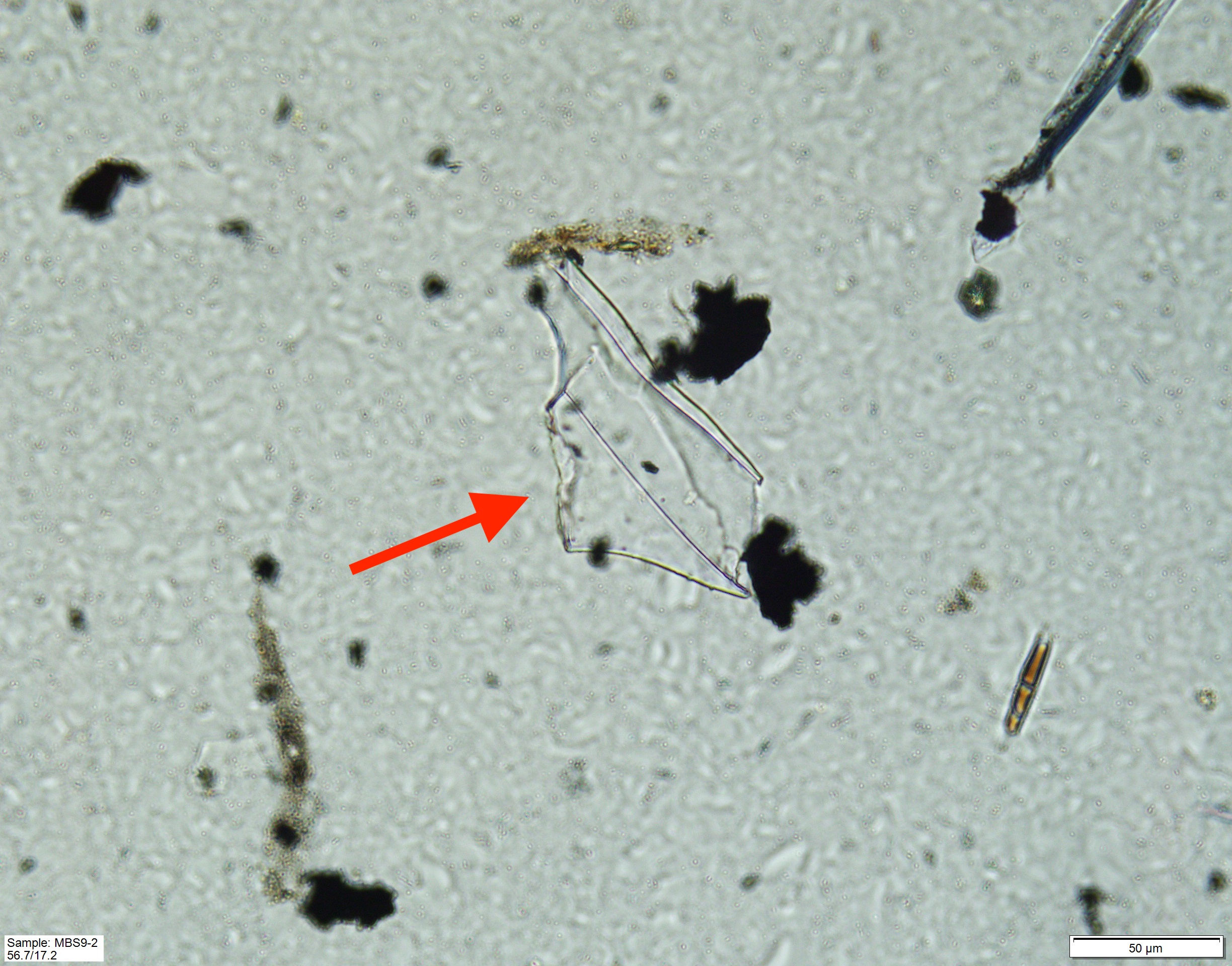
“We matched two previously unknown cryptotephra layers in the ice core with the chemical fingerprints of the Mount Erebus eruptions in 1985 and the eruption of Cerro Hudson in 1991,” Dr Harlan said.
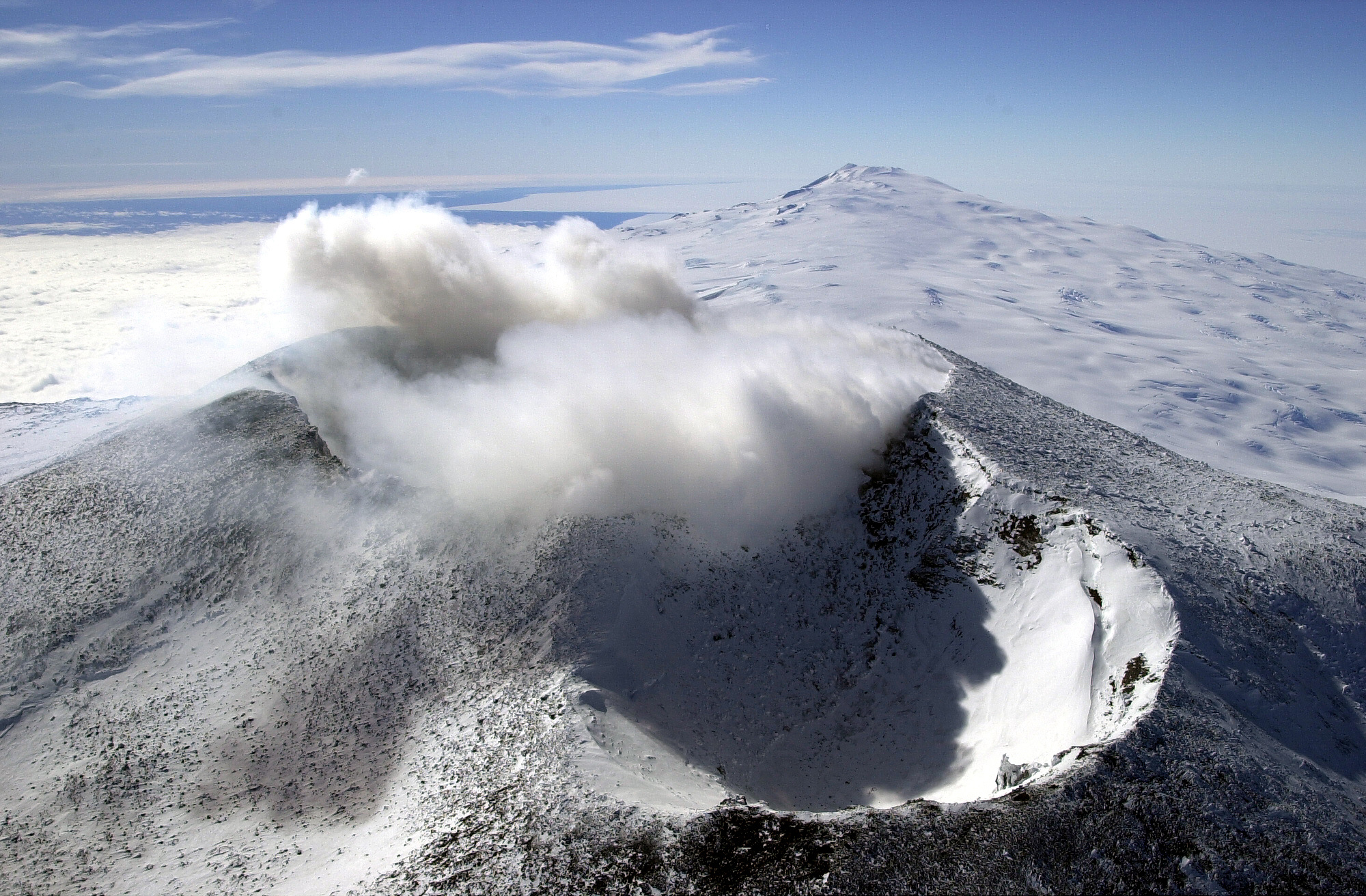
Mount Erebus is the world’s southernmost active volcano, on Ross Island in Antarctica. Active for around 1.3 million years, the most recent eruption of Mount Erebus began in 1972 with a series of explosive eruptions that peaked in 1984-1985 and continues today with a persistent lava lake at the summit and regular small explosions.
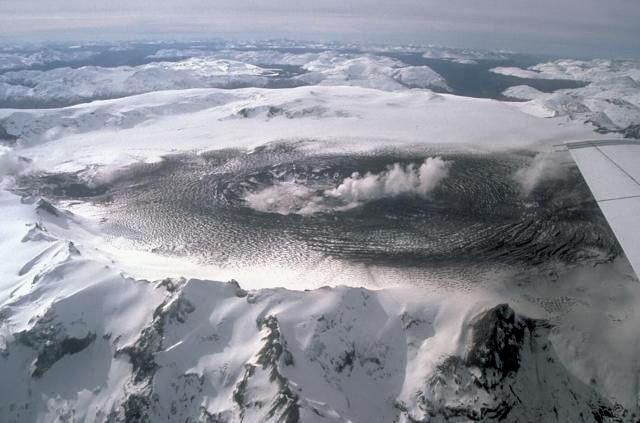
The 1991 eruption of Cerro Hudson in Chile was one of the 20th century’s largest explosive eruptions, injecting massive plumes of ash and sulphur dioxide into the stratosphere. This plume drifted across the Southern Hemisphere, circling the Earth and contributing significantly to severe depletion of the Antarctic ozone hole.
“This is the first record of geochemically confirmed volcanic ash from the Cerro Hudson eruption found in an Antarctic ice core,” said Dr Harlan. “This finding can also help disentangle signals of the Cerro Hudson from the Pinatubo eruption that occurred earlier in 1991, which can help us improve the dating of ice cores in the region.”
More than ash
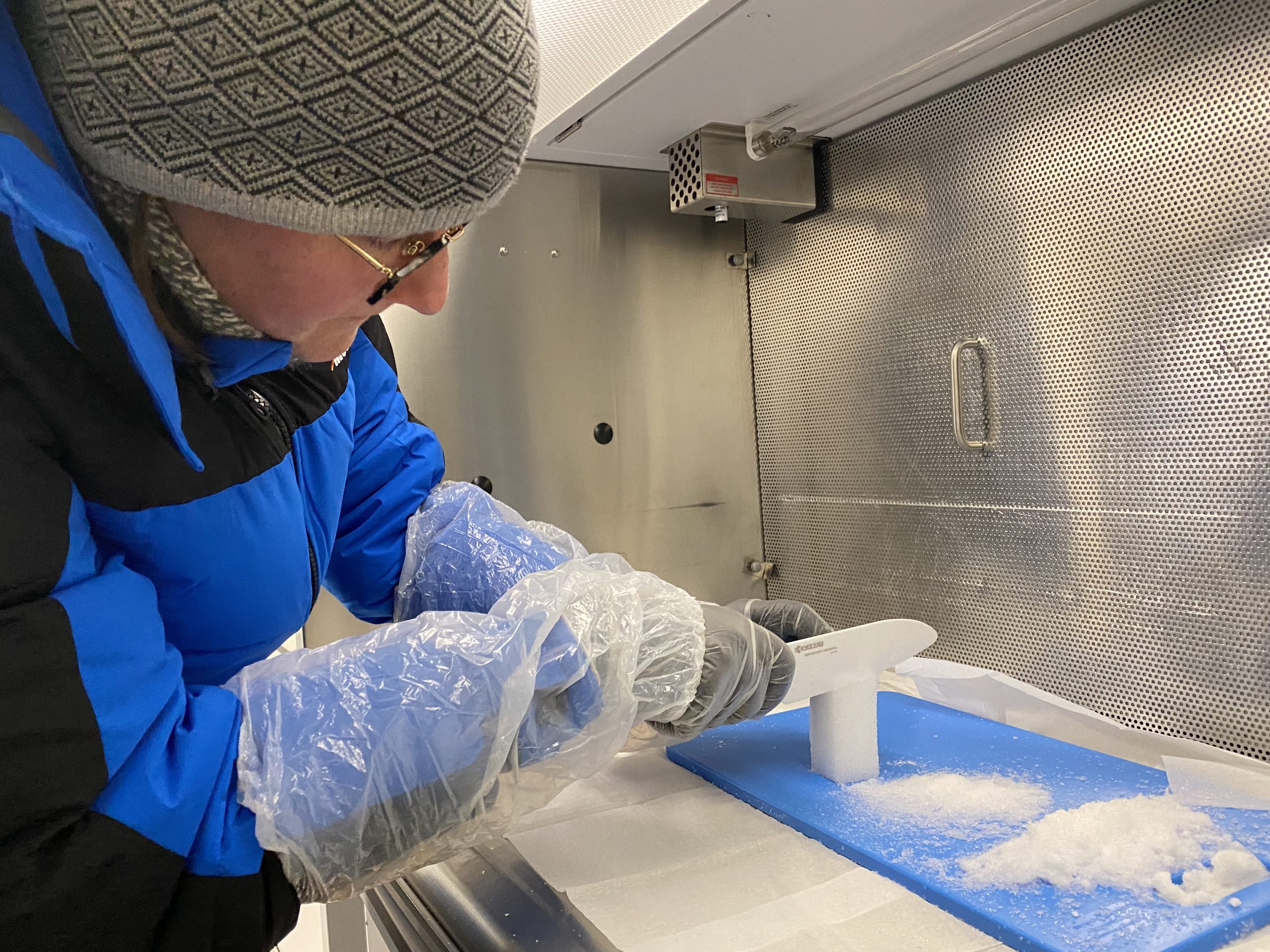
The paper notes that cryptotephra sampling is most often a “needle in a haystack” type of effort across tens to hundreds of metres of ice core material.
“Volcanic layers can be extremely sparse in Antarctic ice cores, so to improve the efficiency of the search, we developed a novel method for targeting sample depths,” said Dr Harlan.
“This method integrates atmospheric transport models – showing how the ash might have travelled to the ice core site – with the commonly used volcanic chemical signals in the ice, to increase the likelihood of finding cryptotephra with less exhaustive sampling required.”
“This is important because most volcanic deposits in Antarctic ice are cryptotephra, meaning the ash is not visible to the naked eye – it can only be seen under a microscope once the ice has been sampled.”
“Our approach could be applied to many other Antarctic ice cores, which could potentially lead to a dramatic expansion of the Southern Hemisphere volcanic ash record.”
“The Mount Brown South ice core is a valuable volcanic record due to its location relative to atmospheric transport via the Southern Indian Ocean, situating it as a significant potential archive of higher-latitude volcanism,” she said.
This would help quantify volcanic impacts on climate, as volcanic eruptions are one of the most important natural drivers of short-term climate variability.
“Better identification of eruption deposits in ice cores enables us to improve datasets used in climate models, assess eruption frequency and magnitude, and evaluate how volcanic activity affected past climate.”
“Our findings also challenge assumptions about how volcanic ash reaches Antarctica. The successful identification of ash from both regional (Antarctic) and distal (South American) eruptions suggests transport routes are more complex than previously recognised, providing new insights into Southern Hemisphere atmospheric circulation,” Dr Harlan concluded.