“Picket fence effect”: First Antarctic-wide map of grounded icebergs
10 September 2026
For the first time, crucially important features of the Antarctic coastal zone have been mapped in high resolution right around the continent, by training an artificial intelligence tool to accurately recognise grounded icebergs from satellite radar images.
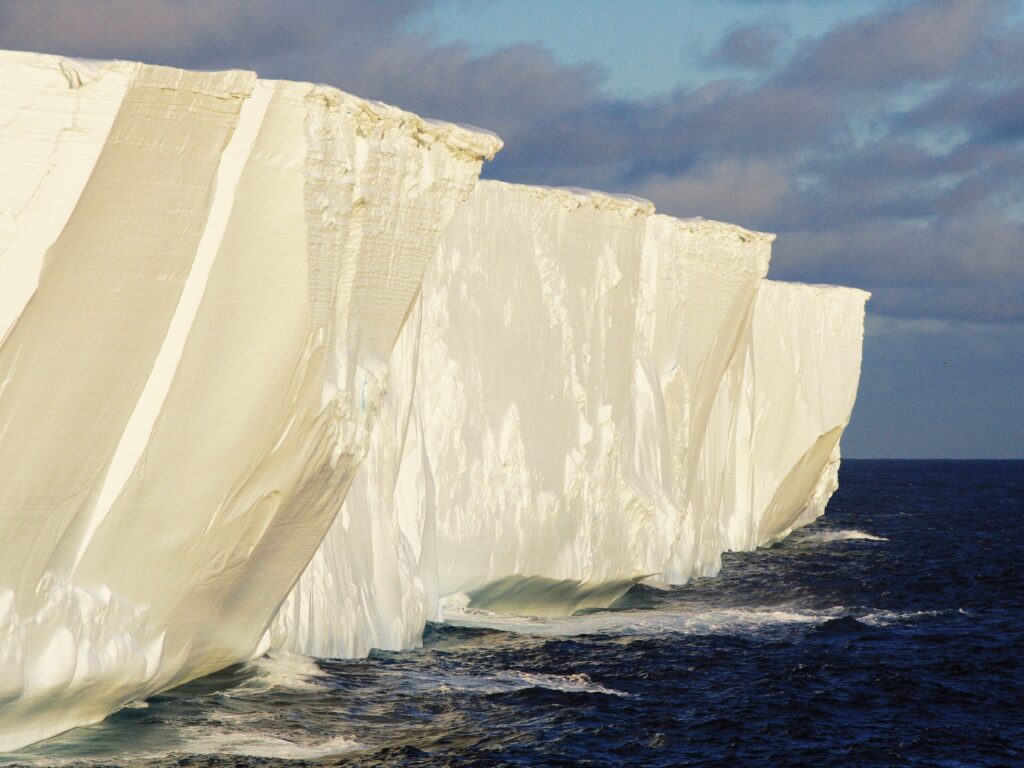
Grounded icebergs are large icebergs that frequently run aground on the sea floor around Antarctica, keeping them stationary for days to decades.
They are important for anchoring sea ice, which in turn holds back land ice from slipping into the ocean, while providing habitat and nutrients for marine ecosystems.
Before Kaihong Jiao started his Masters project with the Australian Antarctic Program Partnership at the University of Tasmania, no large-scale complete map of grounded icebergs existed.
“Traditionally, iceberg monitoring has relied heavily on manual analysis of satellite imagery,” said Mr Jiao.
“The aim of my project was to develop accurate, continent-wide automated mapping of grounded iceberg distribution and size – and that’s what we did.”
“Grounded icebergs around Antarctica: a high-resolution dataset derived from deep learning and Sentinel-1 synthetic aperture radar” – authored by a team from the Institute for Marine and Antarctic Studies, Australian Antarctic Division and Geoscience Australia – was recently published as a ‘highlight’ paper in leading journal Earth System Science Data.
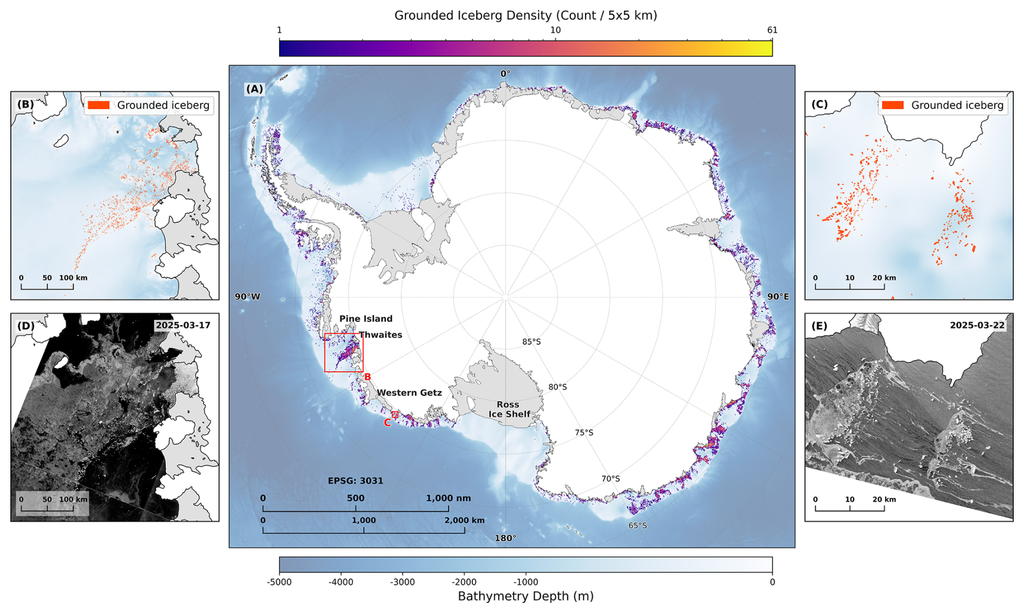
“Using satellite radar imagery and an automated artificial intelligence tool, we mapped nearly 40,000 stationary icebergs in 2025,” Mr Jiao said.
A total of 39,619 grounded icebergs in the dataset cover a combined area of 13,430 km2 and are widely distributed along 57% of the Antarctic coastline, with just 14% of the coastline containing 80% of all grounded icebergs.
But size isn’t everything.
“We discovered that tiny, frequently overlooked icebergs less than one square kilometre in size actually dominate both the total number and area,” said Mr Jiao.
“Our methods – combining satellite imagery from Sentinel-1 with a robust and reliable differentiation tool – successfully reduced the minimum detectable iceberg size to 1.6 hectares.”
‘Tiny’ icebergs accounted for 93% of all grounded icebergs and contribute 54% of the total grounded area.
These dense clusters of smaller grounded icebergs with a widespread presence in shallow waters are crucial for what the authors call the ‘picket fence effect’, where they act as a series of physical anchors to stabilise the stationary ‘landfast’ ice that protects Antarctic ice shelves from the rough Southern Ocean.
Like physical posts in a fence, these iceberg clusters catch and hold sea ice in place, preventing it from breaking away and drifting into the open ocean.
The results may indicate a unique sensitivity of the Antarctic coastal system to climate change, where tiny icebergs are more susceptible to melting and subsequent ‘ungrounding’ in response to ocean warming than larger ones – which could trigger abrupt changes in the stability of landfast ice.
“Our public dataset offers a crucial new baseline for modelling coastal ice stability and understanding broader environmental changes,” Mr Jiao concluded.
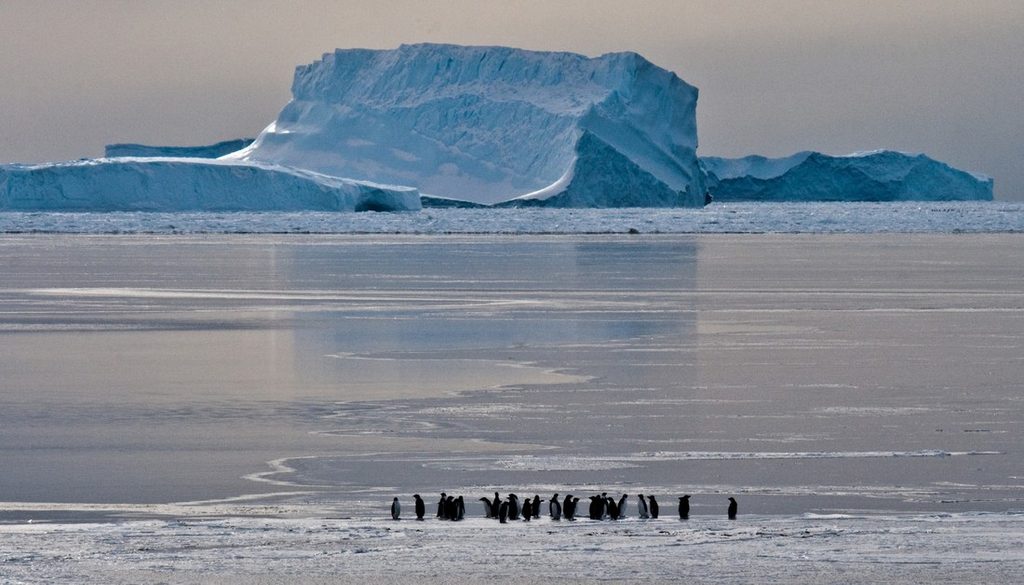
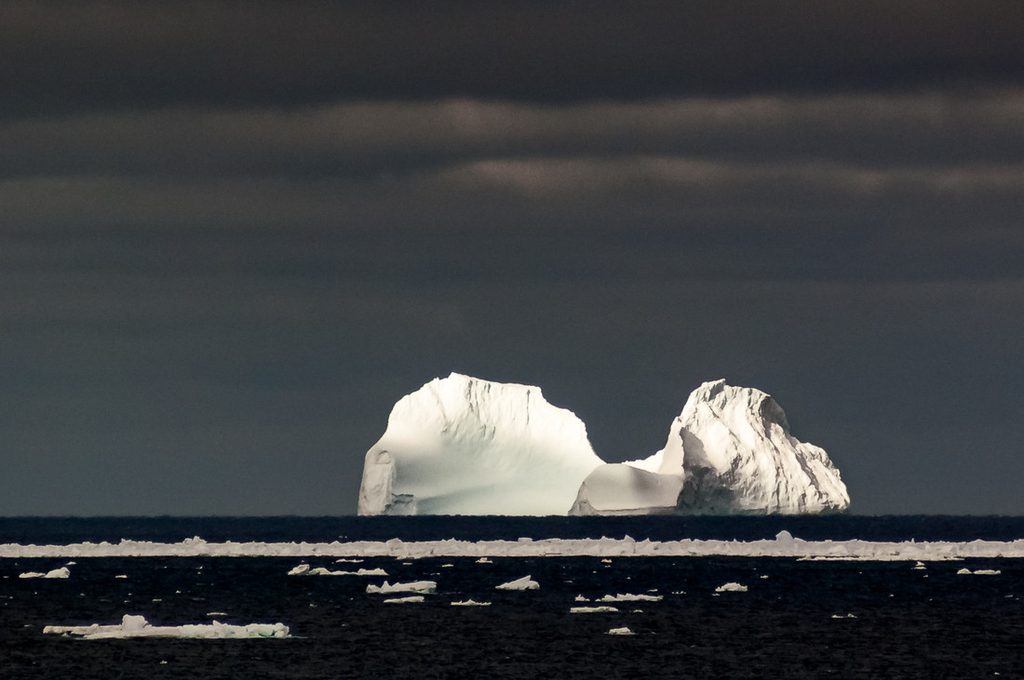
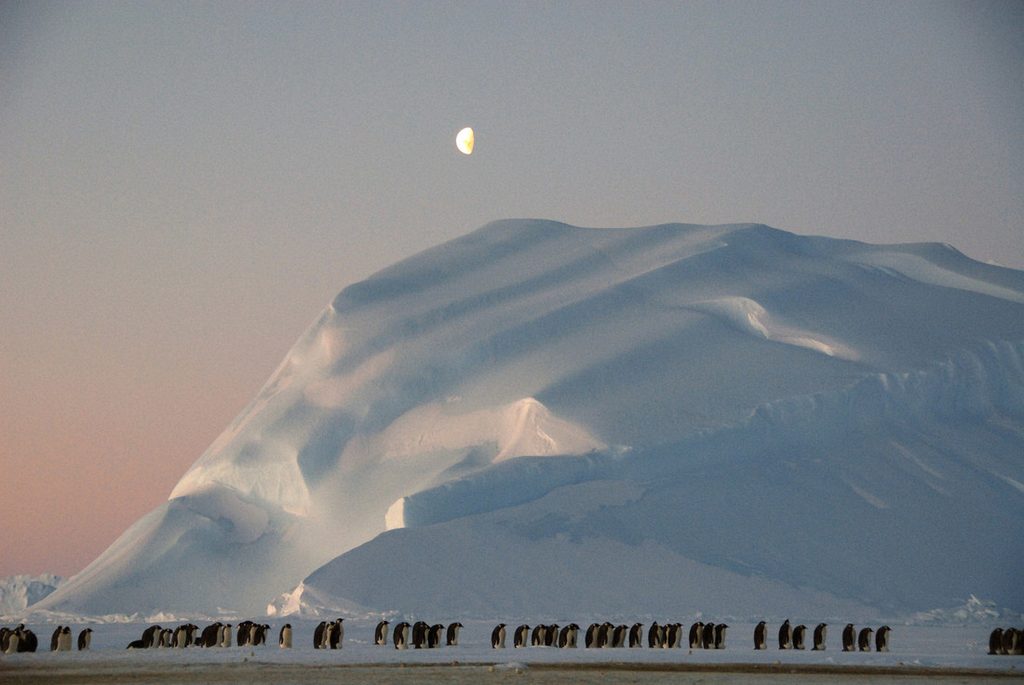

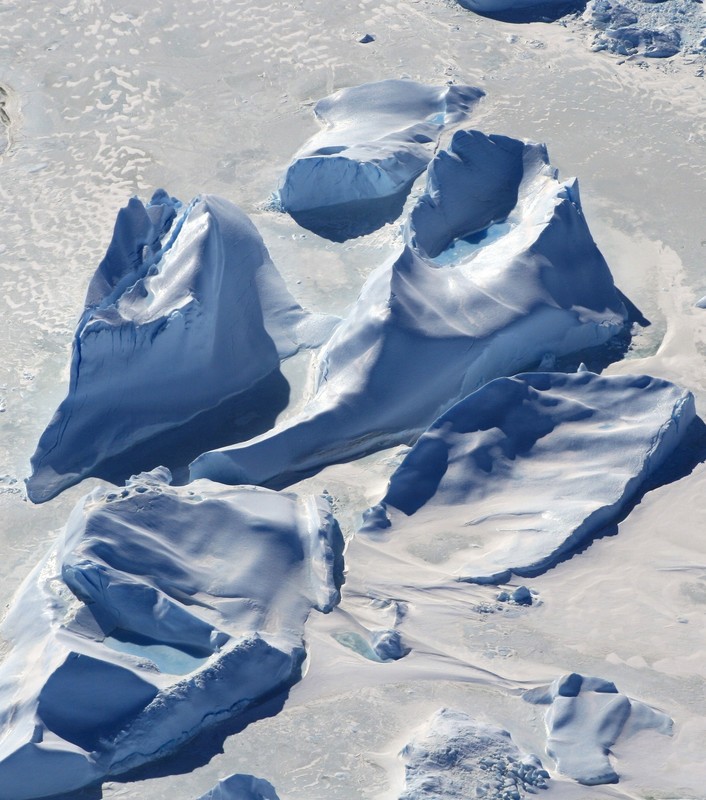
Grounded icebergs and landfast ice, photo credits from top left (clockwise): David Barringhaus, Ian Phillips, Gary Miller, David Barringhaus, Justin Chambers /AAD
READ THE PAPER: Grounded icebergs around Antarctica: a high-resolution dataset derived from deep learning and Sentinel-1 synthetic aperture radar, by Kaihong Jiao, Alexander D. Fraser, Johannes Lohse, Pat Wongpan, Caitlin Adams, and Alexander C. Bradley